

The view has changed
On male beauty as product, the women buying it, and how Asia got there first

Something has shifted in how Asian popular culture positions the male body, and it happened fast enough that it’s worth pausing to actually look at it. The direction of the gaze has changed. Men are increasingly the ones being looked at deliberately, commercially, and with a level of aesthetic investment that would have been culturally illegible in the same markets twenty years ago.
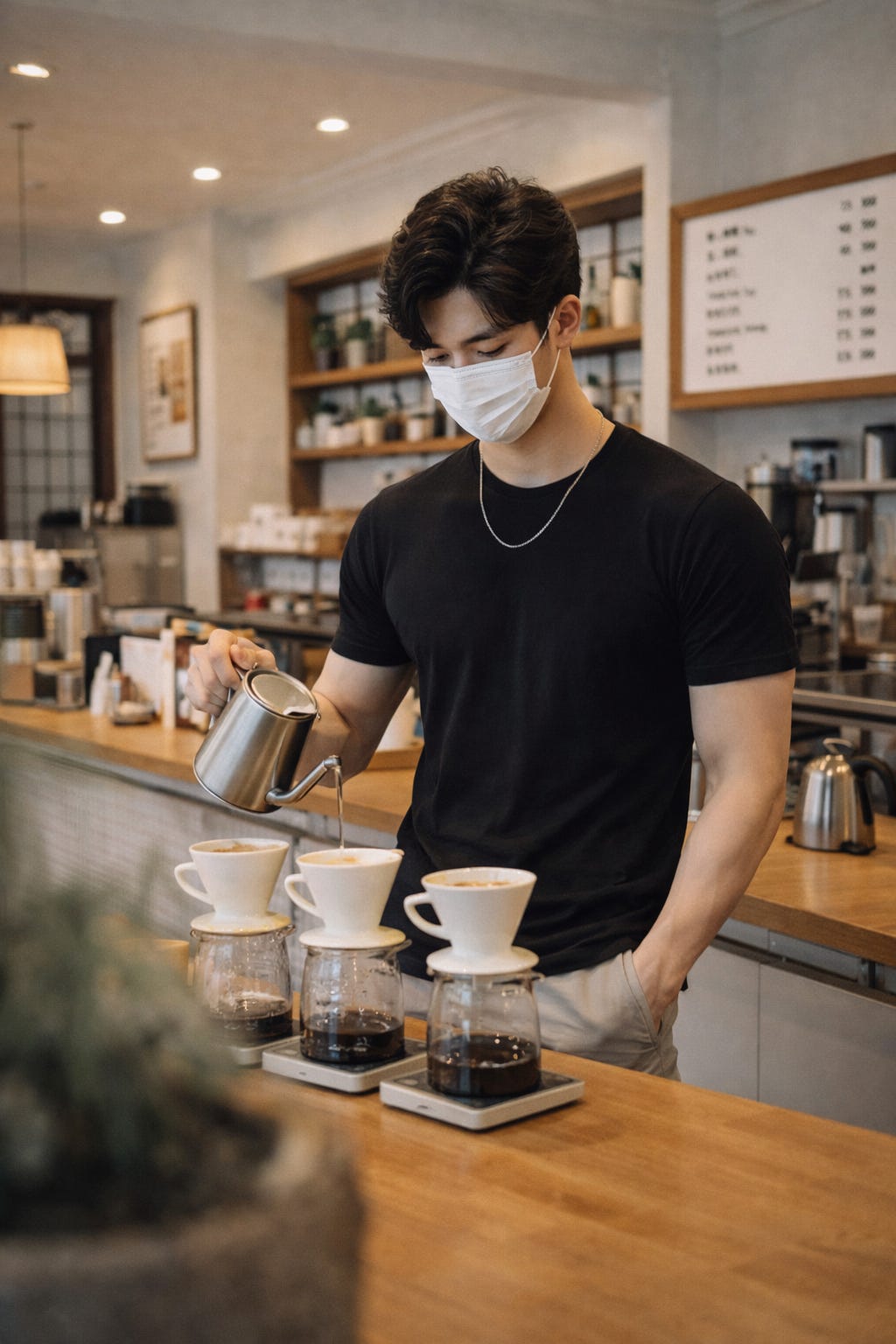
The most literal version of this is the viral Chinese barista phenomenon. Cafés in Shanghai, Chengdu, Beijing the tier-one cities where coffee culture has exploded have discovered that hiring extraordinarily attractive men and putting them behind the bar is a reliable content engine. Customers film them. The videos circulate. The café gets a line out the door. This is not accidental or incidental. It’s a business model, and it works because the female consumer with disposable income and a social media account is now a customer worth designing an experience around. The barista is the product as much as the coffee.
K-pop industrialized this logic years earlier and more thoroughly than anyone else. The idol system produces male beauty at scale the skincare routines, the styled hair, the choreography that exists partly to display the body in motion and markets it primarily to female fans whose financial investment in that beauty is enormous and taken completely seriously as a revenue stream. What’s notable is not that attractive men exist in entertainment but that the commercial infrastructure built around female desire for them is now as sophisticated as anything built around male desire historically. It’s a real industry. It has quarterly earnings.
Anime and manga have been running a parallel track for decades. Jujutsu Kaisen is the current most visible example Gojo, Nanami, Toji, a cast of male characters drawn and animated with the kind of physical specificity and emotional interiority that female audiences respond to, generating fan art and discourse and merchandise at a scale that makes the female gaze in that fandom impossible to ignore or dismiss. This has always existed in the medium but the mainstream visibility of it is newer. The industry knows who is watching and has adjusted accordingly.
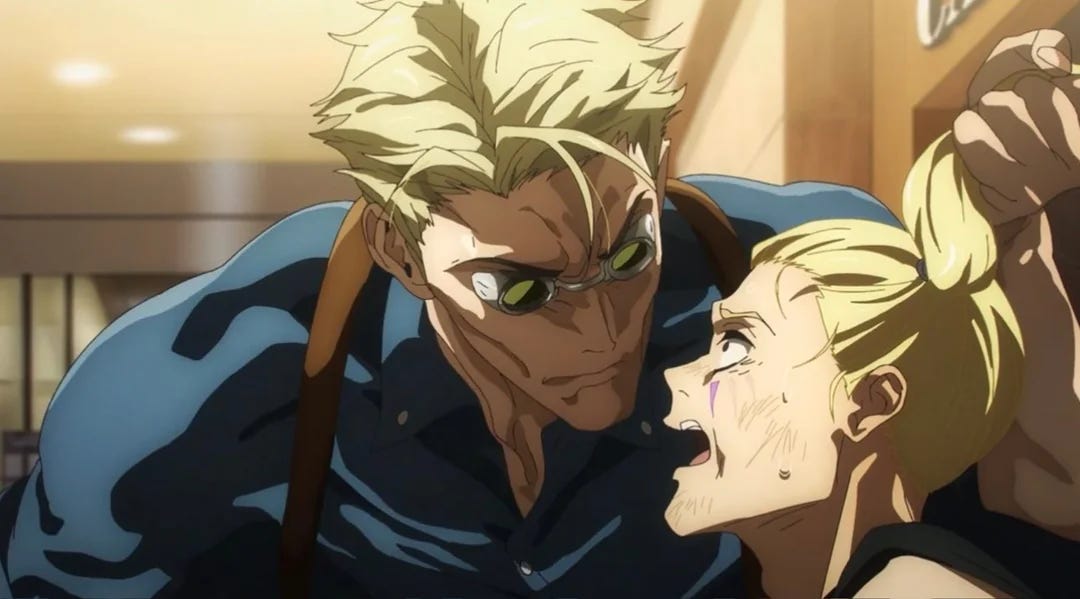
Image: Jujutsu Kaisen
Underneath all of this is something more interesting than just aesthetic trends. The economic rise of women in Asian cities particularly in China, South Korea, Japan, and Taiwan has produced a class of women with money, independence, and appetites that the culture is slowly, sometimes awkwardly, learning to serve. The hot barista going viral is one symptom. The trophy husband discourse in Chinese social media successful women openly evaluating male partners on attractiveness and domestic utility as criteria is another. The female gaze isn’t new. The infrastructure built to accommodate and monetize it is.
There is a second structural explanation worth considering alongside the economic one. China has significantly more men than women — a direct consequence of the one-child policy and decades of sex-selective birth practices. In a marriage market where women are scarce, men compete differently. Looks become a form of capital in a way they haven’t historically been for men in the same culture. The investment in appearance — skincare, aesthetics, fashion, the elaborate grooming culture that has grown rapidly among young Chinese men — is partly a rational response to a market that has shifted the leverage. When there are more men than women, men who look better have a real advantage that didn’t exist in the same way before. The beauty industry didn’t create this. The demographics did, and the beauty industry followed. This connects to something I’ll be writing about next week — the broader phenomenon of looksmaxing, which is the explicit and increasingly systematic pursuit of physical optimization, and what it tells us about the anxiety underneath the aesthetics when the stakes of appearance feel genuinely high.
The most recent and most explicit version of this argument playing out in public is Zhang Linghe in Pursuit of Jade, which premiered in March 2026 and became the first mainland Chinese drama to enter Netflix’s global top ten non-English shows. Zhang plays a fallen marquis — and I will say plainly that he is the most beautiful Asian man I have ever seen, which is relevant context for everything that follows — and the production dressed him with a level of aesthetic care that the Chinese internet immediately noticed and immediately argued about. His makeup in battle scenes was called too delicate. Netizens pulled up historical comparisons of rougher, dirtier, more weathered portrayals of military figures. A state-affiliated military commentary called for works with more “masculine vigor” and criticized “beauty filters” applied to soldiers as undermining the spirit of masculinity. The show’s costume director responded that the production wasn’t pursuing historical accuracy but “freehand brushwork in Eastern aesthetics.” The director said the pheasant feather plume costume was about a king returning to his throne, not a man going to war. The audience — which showed up in enormous numbers, sustained the show in the top ten for four consecutive weeks, and made Zhang Linghe one of the most talked-about actors in the world in early 2026 — mostly didn’t care about the masculine vigor argument. They were watching for exactly what the critics were complaining about. That gap between what the state thinks male beauty should look like and what women are actually watching is the whole post in one drama.
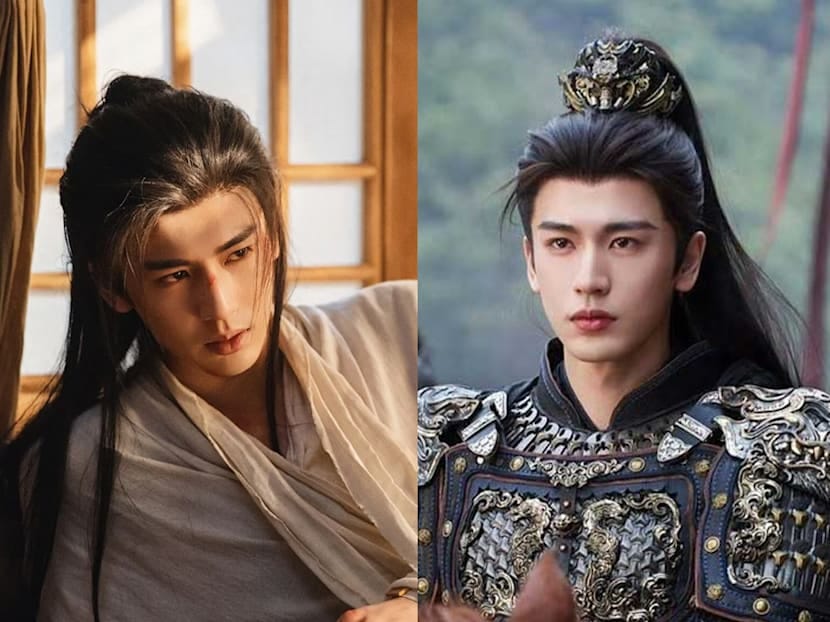
Image: Pursuit of Jade
It’s a correction, is what it is. A long overdue one, and not without its own complications. But watching Asian popular culture figure out how to point the camera in a different direction, and watching it do so with genuine commercial seriousness, is its own kind of satisfying.
My honest position: both are a little strange. The objectification of women, the objectification of men — neither is fully comfortable when you look at it directly. But we live in a world where the first has been the default for so long that it stopped being visible. The fact that the second now exists at scale, that there is a real infrastructure built around female desire with the same commercial seriousness that male desire has always commanded, makes things at least even. And even is somewhere we haven’t been before. I’ll take it.
"The objectification of women, the objectification of men — neither is fully comfortable when you look at it directly." - I should say so.... two wrongs making a right? For myself, I've felt "Asian" media has been boring for some time. Every actor or model is being slowly converged on the same look. I'd like to see a birthmark or a scar, something individual. Anyway, like you say, its what we've collectively decided sells, now we ride it to the end.
Nice article! I have been scouring Substack for my Asian diaspora writers! Great to connect. 🫶🏼